Chris Templeton

Lightbulbs with green keyline

Quantum Innovation: Balancing Opportunity, Risk and Cyber Security Readiness

Quantum innovation is moving from theory to strategic reality, with the NCSC now strongly promoting its timeline for crypto readiness. Seen until comparatively recently as a dystopian, futuristic breakthrough, quantum computing and related quantum technologies are now becoming serious boardroom topics. Governments, technology companies and research institutions are investing heavily – in the hope that quantum systems could help solve problems that are too complex for classical computers.
Man on laptop ChatGPT

AI Agent Security: Why Guardrails and Red Teaming Matter

AI agents are quickly moving from experimentation to real business use. They are being explored for service desk automation, CRM updates, security investigations, workflow orchestration, knowledge retrieval and operational support.
F5 Unity Gold green line

Why work with an F5 Gold Partner?

When your infrastructure depends on secure, high-performing applications, choosing the right partner to deploy, optimise and support an F5 environment can make a world of difference. But with a wide spectrum of F5 partners in the UK market, it’s not always obvious why the level of accreditation matters, or what you gain by choosing an F5 Gold Partner like FullProxy.
F5 logo gold background keyline

Will Upgrading to F5 rSeries Improve my Quantum Resilience?

When sufficiently powerful machines arrive, today’s encryption standards - RSA, ECC, and others - will be rendered obsolete. The UK’s National Cyber Security Centre (NCSC) has already set a 2028 milestone for all of us to complete cryptographic inventories and prepare for post-quantum migration. For many, one of the most strategic steps towards quantum resilience is already on the roadmap for F5 customers: upgrading from iSeries to rSeries.
Gymnast quantum tangle

Crypto-Agility explained; why you need it before 2028

Crypto-agility is your organisation’s ability to quickly adapt to new cryptographic standards without disrupting business operations. Today, most organisations rely on fixed algorithms like RSA or ECC.
Skyscraper with NCSC logo and keyline

Preparing for the Quantum Future: A Practical Guide to the NCSC Post-Quantum Cryptography (PQC) Roadmap

The threat posed by future quantum computers is no longer theoretical. When these machines arrive (or sooner) today’s encryption systems will be at risk, as quantum algorithms such as Shor’s could break widely used public-key schemes. Experts speak of a looming “Q-Day”, and the UK’s National Cyber Security Centre (NCSC) has set out a clear, phased PQC roadmap we should all act on now.
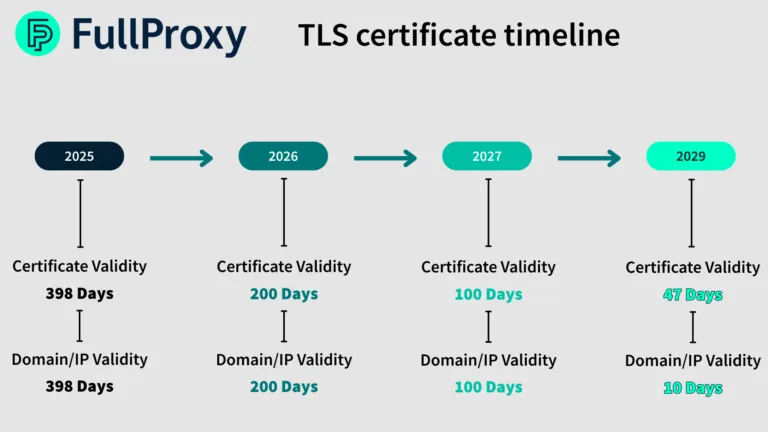
Certificate timeline

Why TLS Certificate Lifecycle Reduction Improves Security

The push for certificate lifecycle reduction stems from a fundamental truth: certificate lifecycle management is not a team member’s core job role – it's often an afterthought and annoyance, a general admin task. With these changes, this will fundamentally not be the case.
Post-quantum timeline

How to Prepare for the NCSC’s Post-Quantum Cryptography Migration Timelines

The arrival of post-quantum cryptography (PQC) is no longer a theoretical concern, it’s a strategic imperative for businesses across the globe. The UK’s National Cyber Security Centre (NCSC) recently issued updated guidance that underscores the urgency for all organisations, particularly those operating critical infrastructure or bespoke IT systems, to begin their migration to PQC today.
Graphic showing a multi cloud network

Untangling Multicloud Networking Complexity

With cloud services becoming increasingly easy to procure, software developers have flocked to them quickly for a range of reasons. Whether this is to unlock productivity, access on-demand innovation, or accelerate releases, the benefits of shifting to cloud networking are quite clear. After this, developers discovered the additional capabilities of another cloud provider and started using that one, too. This rapidly resulted in: