PQC icon greyscale

PQC

PQC and AI: a perfect storm for cyber readiness?

Artificial intelligence and post-quantum cryptography are often discussed as separate cybersecurity challenges. One is immediate, visible and accelerating rapidly. The other feels more strategic, technical and distant. But for those responsible for protecting sensitive data, digital services and customer trust, the two are starting to collide....
Lightbulbs with green keyline

Quantum Innovation: Balancing Opportunity, Risk and Cyber Security Readiness

Quantum innovation is moving from theory to strategic reality, with the NCSC now strongly promoting its timeline for crypto readiness. Seen until comparatively recently as a dystopian, futuristic breakthrough, quantum computing and related quantum technologies are now becoming serious boardroom topics. Governments, technology companies and research institutions are investing heavily – in the hope that quantum systems could help solve problems that are too complex for classical computers.
F5 logo gold background keyline

Will Upgrading to F5 rSeries Improve my Quantum Resilience?

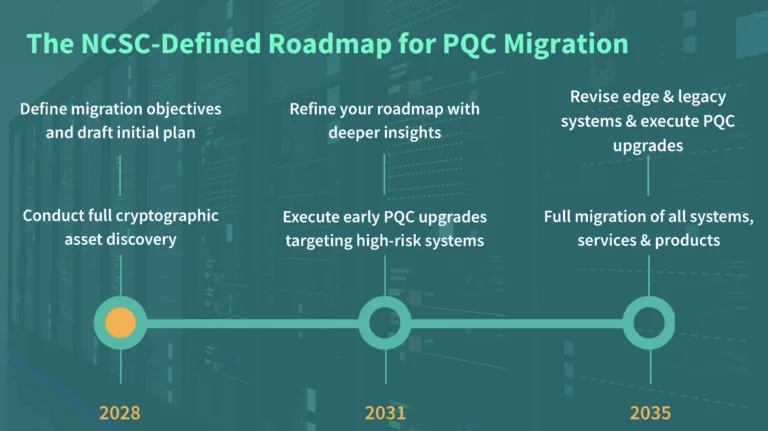
When sufficiently powerful machines arrive, today’s encryption standards - RSA, ECC, and others - will be rendered obsolete. The UK’s National Cyber Security Centre (NCSC) has already set a 2028 milestone for all of us to complete cryptographic inventories and prepare for post-quantum migration. For many, one of the most strategic steps towards quantum resilience is already on the roadmap for F5 customers: upgrading from iSeries to rSeries.
Skyscraper with NCSC logo and keyline

Preparing for the Quantum Future: A Practical Guide to the NCSC Post-Quantum Cryptography (PQC) Roadmap

The threat posed by future quantum computers is no longer theoretical. When these machines arrive (or sooner) today’s encryption systems will be at risk, as quantum algorithms such as Shor’s could break widely used public-key schemes. Experts speak of a looming “Q-Day”, and the UK’s National Cyber Security Centre (NCSC) has set out a clear, phased PQC roadmap we should all act on now.
FullProxy graphic green text on blue background

PRESS: Preparing for Post Quantum Cryptography with AppViewX

 FullProxy is announcing a partnership to deliver managed certificate lifecycle management services with AppViewX, becoming the first in the UK to do so. This strategic partnership, which began in 2024, will enable FullProxy to provide cutting-edge, fully managed certificate lifecycle automation and crypto-agility to its clients, addressing the growing challenges of certificate management in an evolving security landscape.

Post-quantum timeline

How to Prepare for the NCSC’s Post-Quantum Cryptography Migration Timelines

The arrival of post-quantum cryptography (PQC) is no longer a theoretical concern, it’s a strategic imperative for businesses across the globe. The UK’s National Cyber Security Centre (NCSC) recently issued updated guidance that underscores the urgency for all organisations, particularly those operating critical infrastructure or bespoke IT systems, to begin their migration to PQC today.

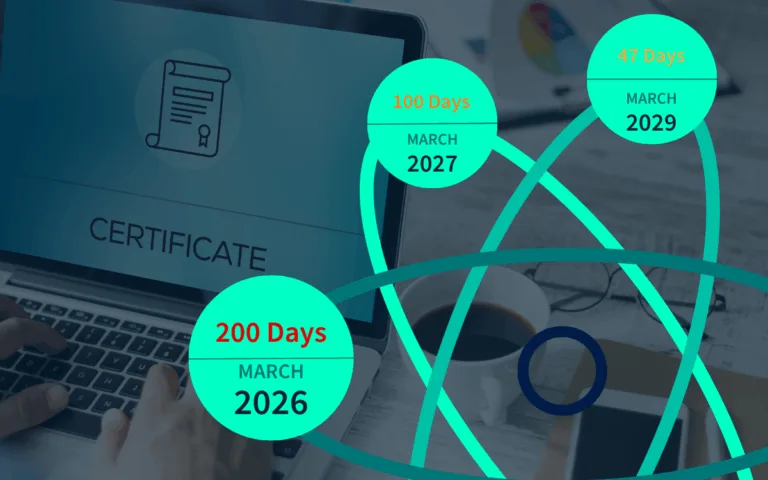
Apple’s 45-Day Certificate Lifecycles: What Does This Mean for You?

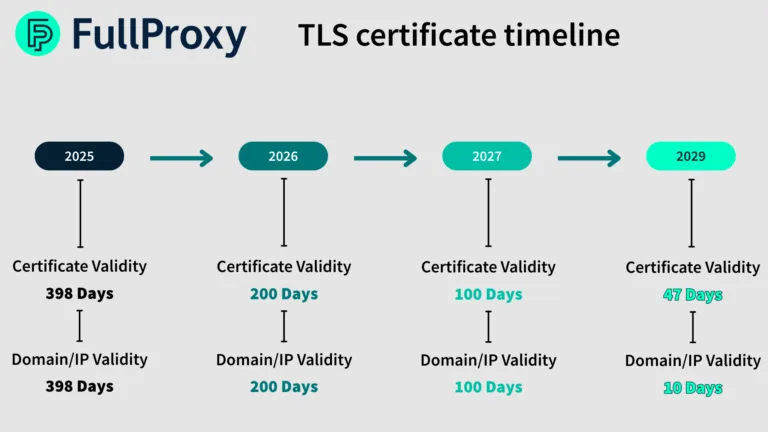
The recent CA/Browser Forum meeting revealed significant changes to Apple's certificate lifecycles, and they seem to be following Google’s lead. With a proposal to reduce TLS validity periods to just 45 days by 2027, this adjustment to Apple's certificate lifecycles has sparked even more anxious discussion among IT professionals – yes, it’s frustrating, but it’s also important. 
Securing Wildcard Certificates on Laptops

Wildcard Certificates: The Pros and Cons

Certificate management is a critical part of an organisation’s cyber security that cannot be ignored. Certificates are vital for protecting data transmitted between websites and users. If not properly managed, data could be at significant risk. One certificate option that organisations often consider is wildcard certificates, which provide some benefits but also carry security risks.
Google search query for 90 day cert validity

Google’s 90-Day TLS Certificate Limit: What Does It Mean?

Google's announcement to reduce the lifespan of Transport Layer Security (TLS) certificates from 398 days to 90 days continues to be a hot topic of discussion among information security professionals, especially those directly involved in replacing and updating certificates. It’s especially frustrating because – although mooted back in April of 2023 – there’s still no confirmed date for its implementation. Yet Chrome browsers account for just over 50% of all UK web traffic (Statista), so there’s no avoiding the impact that this will have.