Cyber Security

Cyber Security

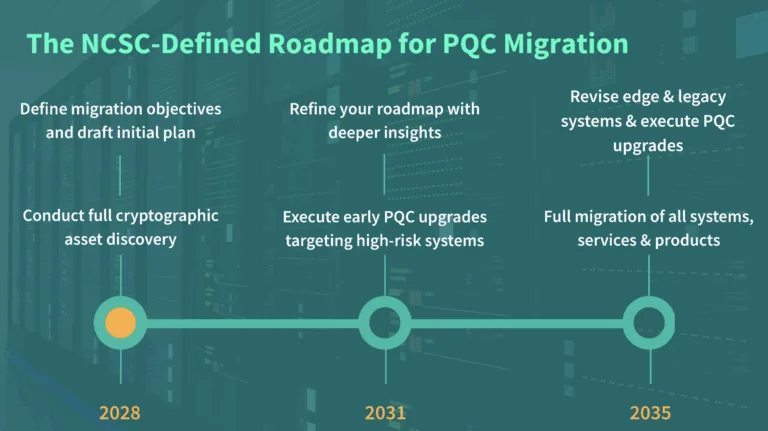
The threat posed by future quantum computers is no longer theoretical. When these machines arrive (or sooner) today’s encryption systems will be at risk, as quantum algorithms such as Shor’s could break widely used public-key schemes. Experts speak of a looming “Q-Day”, and the UK’s National Cyber Security Centre (NCSC) has set out a clear, phased PQC roadmap we should all act on now.
The arrival of post-quantum cryptography (PQC) is no longer a theoretical concern, it’s a strategic imperative for businesses across the globe. The UK’s National Cyber Security Centre (NCSC) recently issued updated guidance that underscores the urgency for all organisations, particularly those operating critical infrastructure or bespoke IT systems, to begin their migration to PQC today.
As we step in to 2025, the cyber security landscape is evolving at a rather quick pace. With an estimated 7.78m cyber attacks on UK businesses last year according to the UK Government, it’s important that you adapt to new threats, technologies, and strategies to safeguard your digital assets and maintain trust with stakeholders. Throughout this piece, the FullProxy team explores our four key insights shaping cyber security in 2025.
Now more than ever is the perfect time to reflect on the past and consider how we can enhance our cyber security practices using cyber security tools. With new threats emerging by the second, staying one step ahead of cyber threats is crucial. Within this blog, FullProxy will explore the best cyber security tools available in the market right now and provide insights on the steps you should take to refresh your network for a secure and resilient future.
It’s 2024, which means the landscape of cyber security is poised for significant shifts, demanding our attention and proactive measures. According to CyberCrime Magazine, the projected cost of cyber attacks is an alarming $10.5 trillion annually by 2025.  This underscores the urgent need for organisations and individuals to prioritise cyber security in the face of rapid technological advancements. Undoubtedly, artificial intelligence (AI) will yield a profound influence on cyber attack strategies and defence mechanisms

Cybersecurity employee training is critical for every business. In today’s digital world, with new emerging threats occurring daily, a company can face a cyber attack at any time. Cybercriminals are becoming more sophisticated in their attacks and constantly developing new ways to infiltrate systems and steal valuable information, putting businesses and their customers at risk.

With a new year comes new challenges. As technology advances, businesses rely more on internally managed systems to protect their data and employees from cyber-attacks. As a result, we are witnessing shifts in the cybersecurity trends. Data breaches, ransomware, and phishing attempts are becoming the norm. Here are some of the cyber security threats to expect in 2023.
With Black Friday just around the corner, the excitement of incredible deals is matched only by the increased risk of cybercrime. Last year, the UK accounted for over 10% of global Black Friday online searches, making it a prime target for cybercriminals looking to capitalise on the shopping frenzy. Don’t let the thrill of a bargain put your personal information at risk.